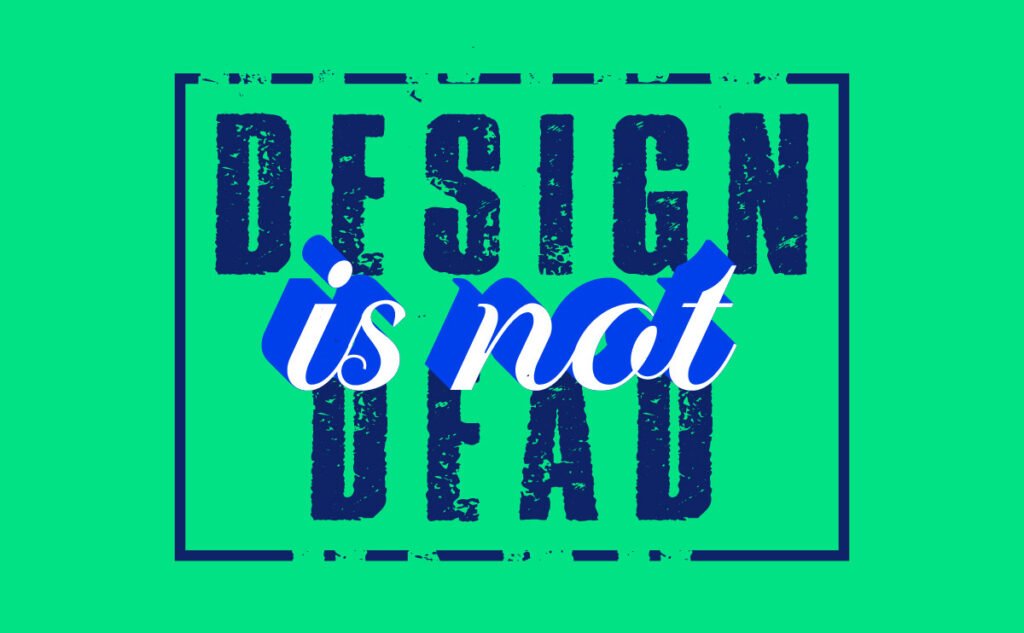
What happens when a designer stops waiting for the right opportunity and decides to create one? Darshita Patankar, a visual designer and illustrator, has sparked a conversation with DESIGN IS DEAD—a bold, pink, cinematic film that challenges the idea that AI is killing creativity. Her story reminds us that standing out isn’t always about doing more. Sometimes, it’s about showing the world what makes you different.
Darshita Patankar’s original post on X
What You Will Learn
- Why design still matters in the age of AI.
- What makes a creative portfolio memorable.
- Why individuality can matter more than expensive production.
- How designers can create their own opportunities.
From Creative Anxiety to a Bold Statement
In October 2026, Darshita took an unconventional approach to presenting herself professionally. Instead of relying solely on a traditional CV or portfolio, she created DESIGN IS DEAD, a four-minute film produced with her brother, Vikrant Patankar.
With striking visuals, a distinctive pink aesthetic, and a personal story tracing her creative journey back to childhood experiments with MS Paint, the film feels more like a cinematic statement than a conventional job application.
Darshita’s message challenges the familiar claim that AI has made design obsolete. But the response to her project revealed another important question: do designers need extraordinary production budgets to get noticed today?
Not necessarily. The more interesting lesson lies in the thinking behind the work.
Design Is Not Dead. It’s Evolving.
AI can generate images, explore visual directions, and accelerate creative workflows. But producing a visual and solving a design problem aren’t the same thing.
Design requires judgement. It involves understanding an audience, interpreting a brief, making decisions, and communicating an idea with purpose. The tools may change, but the need for thoughtful creative direction remains.
The reactions to Darshita’s film reflected different sides of this conversation. Some viewers were struck by its cinematic execution. Others focused on its authenticity and the personality behind the work. One particularly interesting reaction came from someone who initially thought the film had been made using AI—a reminder of how much creative work is now viewed through the lens of automation.
Yet the film’s strongest message isn’t about competing with AI. It’s about developing a perspective that makes your work recognisably yours.
Your Individuality Is Your Advantage
Think about how many portfolios you’ve seen featuring polished mock-ups, carefully arranged case studies, and impressive visual identities. Many are technically excellent, but some are difficult to distinguish from one another.
The problem isn’t a lack of talent. It’s that the thinking behind the work often remains invisible.
Darshita’s film gives viewers a glimpse of the person behind the visuals: her interests, creative influences, experiments, and approach to storytelling. That personal perspective helps turn a collection of skills into a memorable professional introduction.
As entrepreneur and creator Ankur Warikoo noted in his reaction to the film, its authenticity was what made it difficult to copy.
That’s a valuable lesson for designers. You don’t need to invent an entirely new visual style to stand out. Your individuality can emerge through the questions you ask, the references you notice, the decisions you make, and the way you explain your work.
Your creative identity isn’t just what people see. It’s the thinking that makes your work different.
Do You Need a Hollywood-Level Portfolio?
Let’s be realistic. Not every designer has access to a professional film crew, an elaborate set, or the budget to produce a cinematic pitch. Nor should Darshita’s project become a new standard that makes other designers feel inadequate.
The goal isn’t to recreate her film. It’s to understand what makes it effective.
Here are three practical ways to apply the lesson to your own work:
1. Tell the story behind the design. Don’t show only the final mock-up. Explain the problem, your approach, and why you made particular decisions.
2. Let your personality come through. Share your experiments, influences, and creative process. People should be able to understand how you think, not just which software you use.
3. Choose your own format. A thoughtful case study, a short video, an illustrated article, or a well-presented portfolio can all communicate your value. Make something that suits your strengths and resources.
You don’t need to be the loudest person in the room. You need to give people a reason to remember you.
Stop Waiting to Be Discovered
Creative careers can be frustrating. Designers spend hours refining portfolios, learning new tools, and applying for opportunities, often wondering whether anyone will notice their work.
It’s easy to keep waiting for the perfect moment: a better portfolio, better equipment, or someone willing to give you a chance.
Darshita’s approach offers a different possibility. She turned her own job search into a public demonstration of her creativity, storytelling, and initiative.
You can do something similar on a smaller scale. Pick a project that represents your strengths. Explain what inspired it. Share the decisions behind it. Put it out into the world.
Your first attempt doesn’t need to go viral. Its purpose is to help people understand what you can do and how you think.
Design Is Not Dead. Your Perspective Matters.
AI will continue to reshape the creative industry. Some tasks will become faster, familiar workflows will evolve, and designers will need to adapt.
But design has never been only about producing attractive visuals. It is about ideas, interpretation, communication, and purposeful decisions.
Darshita Patankar’s DESIGN IS DEAD is a reminder that a creative career isn’t built on technical skills alone. How you present your work, communicate your thinking, and express your individuality can matter just as much.
You don’t need a cinematic production to make an impression. You need a point of view, the courage to develop it, and the willingness to share it.
So, ask yourself: What can you create that reflects the way only you see the world?
That might be where your next opportunity begins.
Loved This?
Check Out These Related Reads
- 55 Best Hindi Fonts for Creatives, Curated Free and Premium Fonts for Indian Designers
- 25 Bold Fonts to Make Your Designs Stand Out – Free & Premium
- Top 40 Free Typography Fonts Every Designer Should Know
- Best Blogs for YouTubers, Vloggers, Influencers & Content Creators in 2025
- The Psychology of Fonts: How Typography Shapes Brand Perception
Share