Learning Tools Helps Early, Not Forever
Most designers stay average not because they lack talent, but because early career growth often hides deeper thinking gaps.
Early in a design career, tools feel like growth. Learning new software builds confidence and often leads to better opportunities. I experienced this when learning After Effects helped me move into a larger organization like OLX. At that stage, new skills directly translated into career progress.
But this phase doesn’t last forever. As roles change and companies mature, tool-based growth slows down. Motion graphics, UI tools, or new features stop being the differentiator. What matters more is how a designer thinks—how problems are approached, not just how fast they are executed. This is where many designers feel stuck without understanding why.
Comfort Zones Slow Designers Down
One common reason designers stay average is comfort. Many designers remain in the same company for five or six years, doing similar work every day. The environment feels safe. Expectations are known. There is no pressure to rethink decisions.
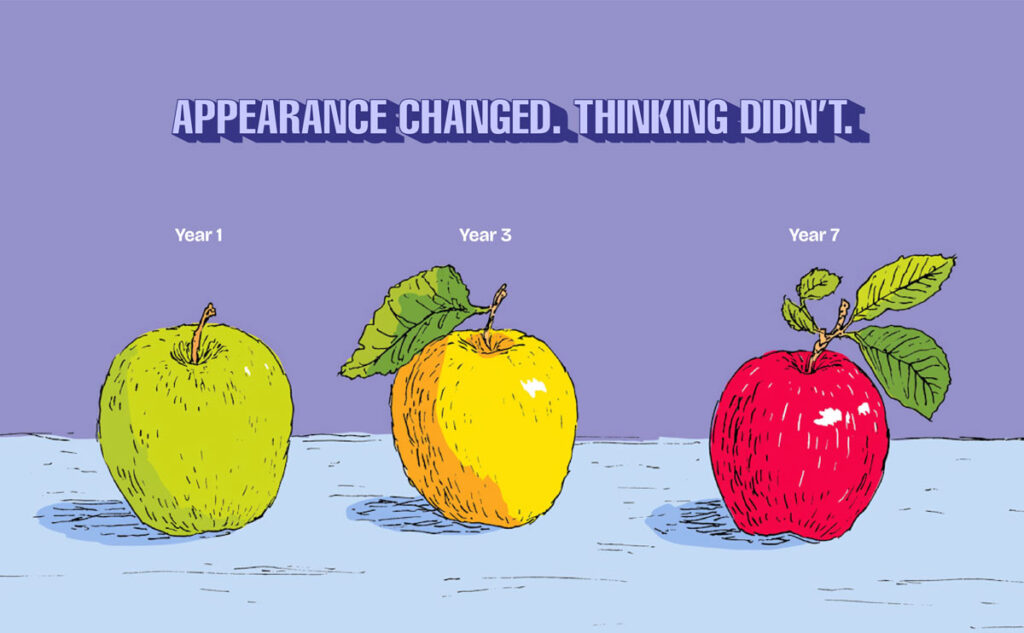
Like every other industry, the design industry constantly evolves. Visual styles change. Platforms change. User expectations change. But when designers don’t actively learn, experiment, or work on new problems outside daily tasks, their thinking stays the same. Over time, their output may still look polished—but it becomes outdated.
Stability is not the problem. Lack of growth is.
Design Is Often a Thankless Job
This is a reality many designers struggle to accept. When design works well, it blends in. Nobody notices it. When it doesn’t, questions start coming. Feedback is rarely balanced, and appreciation is inconsistent.
Many designers expect recognition to fuel motivation. But in professional environments, design is judged by outcomes, not effort. Designers who rely on appreciation for validation often feel frustrated and undervalued. Designers who accept this reality focus less on praise and more on responsibility. That mindset shift changes how work is approached.
Mindset Outgrows Skills Over Time
Skills are important. But skills alone don’t create long-term growth. This is the core of the design mindset vs design skills debate.
Design mindset includes judgment, prioritization, and restraint. It’s the ability to decide what not to design. Many designers keep adding skills but don’t improve decision-making. They know how to design, but not why something works—or doesn’t.
Design maturity comes from understanding context: brand, audience, and business goals. Without this perspective, even highly skilled designers remain average.
Guidelines Are Not Creative Enemies
Earlier in my career, brand guidelines felt restrictive. It seemed like creativity was being limited. But working within strong brand systems taught me an important business truth: guidelines exist to create consistency, not to suppress ideas.
When designers truly understand guidelines, design decisions become faster. Approvals become smoother. Trust increases. Work outside guidelines may look impressive in a portfolio, but work within them is what solves real business problems. This is where designers move from execution to ownership.
Learning Needs Direction
Learning has always played a key role in my growth—but not random learning. In 2018–19, learning After Effects supported a clear career move. In 2020–21, learning UI/UX wasn’t immediately required for my role, but it changed how I think about structure, users, and systems.
The difference is intention. Learning with purpose compounds. Learning without direction becomes noise. Designers who move ahead invest in skills before they are forced to.
Average Is a Thinking Problem
Most designers don’t stay average because they lack talent. They stay average because they stop questioning their own thinking. They rely too heavily on tools, stay too long in comfort zones, and expect validation instead of impact.
Design skills open doors. Design mindset decides how far you go. Growth begins when designers take responsibility for how they think—not just what they create.
Final Thought
Staying average is rarely a sudden failure. It’s usually the result of comfortable habits repeated over time. Designers don’t stop growing because they lack talent—they stop growing because they stop questioning how they think, learn, and decide.
Tools will keep changing. Trends will keep shifting. But the designers who move forward are the ones who evolve their mindset along with their skills. Growth begins the moment you stop relying on time and start taking responsibility for how you think.
Loved This?
Check Out These Related Reads
- How Calligraphy Shapes the Future of Modern and Digital Design
- 25 Bold Fonts to Make Your Designs Stand Out – Free & Premium
- Top 40 Free Typography Fonts Every Designer Should Know
- Best Blogs for YouTubers, Vloggers, Influencers & Content Creators in 2025
- The Psychology of Fonts: How Typography Shapes Brand Perception
FAQ: Why Most Designers Stay Average in Their Careers
Why do most designers stay average despite gaining experience?
Most designers stay average because experience alone doesn’t guarantee growth. When designers repeat the same type of work for years without challenging their thinking, learning new perspectives, or adapting to industry changes, progress slows—even if they stay busy.
Is learning new design tools enough to grow as a designer?
Learning tools helps in the early stages of a career, but it’s not enough in the long run. Tools support execution, not decision-making. Long-term growth comes from improving design thinking, judgment, and understanding context—not just software skills.
How does comfort zone affect a designer’s career?
Staying too long in a comfort zone limits exposure to new problems and ideas. Designers who remain in the same role, company, or workflow without continuous learning often fall behind as the design industry evolves.
Why does design feel like a thankless profession?
Design often goes unnoticed when it works well and gets questioned when it doesn’t. This makes the profession feel thankless. Designers who seek validation instead of focusing on impact and responsibility are more likely to feel stuck and frustrated.
What helps a designer move beyond being average?
Designers move beyond average by developing the right mindset—learning with intention, understanding business and brand guidelines, accepting feedback, and continuously questioning how and why their designs work. Growth happens when thinking evolves along with skills.
Share